
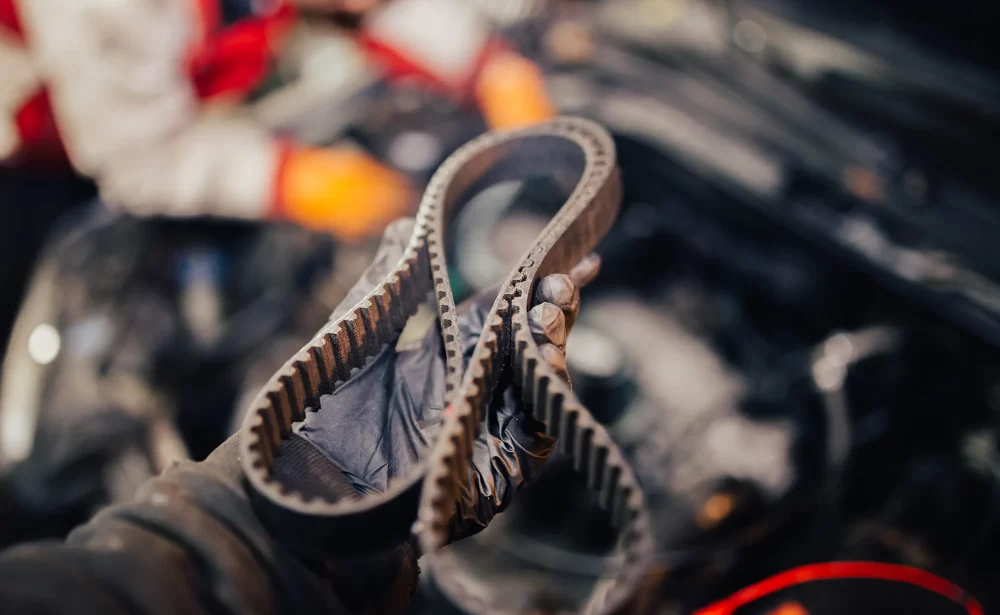
Timing belts and engine hoses play a critical role in keeping your vehicle running smoothly and preventing serious engine damage. The timing belt controls the synchronization between the engine’s crankshaft and camshaft, ensuring that the engine valves open and close at the correct time.
Engine hoses are responsible for transporting coolant and other fluids throughout the engine system. These hoses help regulate engine temperature and prevent overheating by circulating coolant between the radiator and engine.
Over time, belts and hoses naturally wear out due to heat, pressure and regular engine operation. Regular inspection and timely replacement help prevent unexpected breakdowns and expensive engine repairs.
What Is a Timing Belt?
The timing belt is a toothed rubber belt that connects the crankshaft and camshaft to keep the engine components moving in perfect synchronization. This synchronization allows the engine valves to open and close at the correct moment during the combustion cycle. If the timing belt fails, the engine can stop immediately and may suffer serious internal damage. Because of this, timing belt replacement is an essential part of preventative vehicle maintenanc
Skilled technicians
Best quality parts
Quality Equipment
What Do Engine Hoses Do?
Engine hoses are flexible rubber tubes that carry coolant and other fluids between different components of the engine.
Common hoses in your vehicle include:
• Radiator hoses
• Heater hoses
• Coolant bypass hoses
• Vacuum hoses
These hoses help maintain proper engine temperature and ensure fluids move efficiently through the cooling system. Damaged or leaking hoses can lead to coolant loss, overheating and potential engine failure if not repaired quickly.
Signs Your Timing Belt or Hoses Need Replacement
Some common warning signs that your timing belt or hoses may need inspection include:
• Cracks or wear on the timing belt
• Squealing or ticking noises from the engine
• Engine misfires or rough running
• Coolant leaks under the vehicle
• Engine overheating
For example, cracks, soft spots or leaks in coolant hoses often indicate deterioration and should be replaced to prevent system failure. Ignoring these warning signs can lead to serious engine damage and costly repairs.
Why Regular Inspection Is Important
Regular inspection of timing belts and hoses helps prevent unexpected breakdowns and protects the engine from severe damage.
Benefits of regular maintenance include:
• Preventing engine overheating
• Reducing the risk of timing belt failure
• Improving engine reliability
• Avoiding costly engine repairs
• Extending vehicle lifespan
Most manufacturers recommend replacing the timing belt at specific mileage intervals to ensure reliable engine performance.
Why Choose Our Timing Belt & Hose Specialists
Timing belt and hose repairs require experience and precision to ensure proper engine operation. Our technicians use professional tools and proven procedures to inspect and replace these components safely and efficiently.
- Experienced automotive technicians
- Professional inspection and replacement services
- High quality belts and hos
- Transparent pricing and honest advic
- Fast and reliable service
Most vehicles require timing belt replacement between 60,000 and 100,000 kilometres, depending on the manufacturer’s recommendation.
A broken timing belt can cause the engine to stop immediately and may lead to severe damage to internal engine components.
Engine hoses typically last 4 to 5 years depending on driving conditions and maintenance.
Signs include coolant leaks, cracks in the hose, soft or swollen areas and engine overheating.
Driving with a worn timing belt is risky because the belt can fail suddenly, which may cause major engine damage.
EXCELLENTTrustindex verifies that the original source of the review is Google. What kind of service costs $4000 , bloody hell....get a Toyota FFS.....i've had my Kluger for 15 years......other than tyres, oil and filters, spark plug and tranny service has cost about $1200 all up..Posted onTrustindex verifies that the original source of the review is Google. Had a new A/C compressor fitted. No up selling just what I needed, OEM. Politeness and work ethic 11 out of 10Posted onTrustindex verifies that the original source of the review is Google. Was very helpful and great service thankuPosted onTrustindex verifies that the original source of the review is Google. Harry was fantastic to deal with. He explained everything clearly and made sure my car was in great condition before handing it back. Really honest and professional service. Highly recommend!Posted onTrustindex verifies that the original source of the review is Google. Was having trouble with my car other mechanics couldn’t work it out bought it in to Harry problem solved he fixed it I found him to be very Honest reasonably priced he also helped my son buy his first car. He came out to see a couple of cars with us and was very pleased i’m making sure that we bought the right car and it had no major issues. He took time and patience and was there for us and for that I would like to thank you for his services.Posted onTrustindex verifies that the original source of the review is Google. Prompt, honest and professional service, with great communication.Posted onTrustindex verifies that the original source of the review is Google. Just getting a friendly quotePosted onTrustindex verifies that the original source of the review is Google. Shocking experience just came to get my car serviced and took them the whole day and returned my car back dirty